CNC (Computer Numerical Control) is the system responsible for controlling and automating the movements and operations of a machine tool based on pre-programmed instructions. Using these commands, the control system interprets parameters such as the position and path of the axes, feed rates, and tool movements, enabling machining operations to be performed with a high level of precision and repeatability.
This technology has made it possible to automate a large part of manufacturing processes and is found in lathes, milling machines, machining centers, and many other industrial machines. However, the operation and working methods can vary considerably depending on the control system installed. Manufacturers such as Fanuc, Siemens, and Heidenhain offer systems that are widely used in the industry, so understanding their features and differences is an important consideration when purchasing a CNC machine.
The Leading Numerical Control Manufacturers
There are numerous manufacturers in the numerical control market, although some have achieved a particularly prominent presence within the machining industry. The choice of one system over another can influence aspects such as programming, machine operation, process automation, and maintenance.
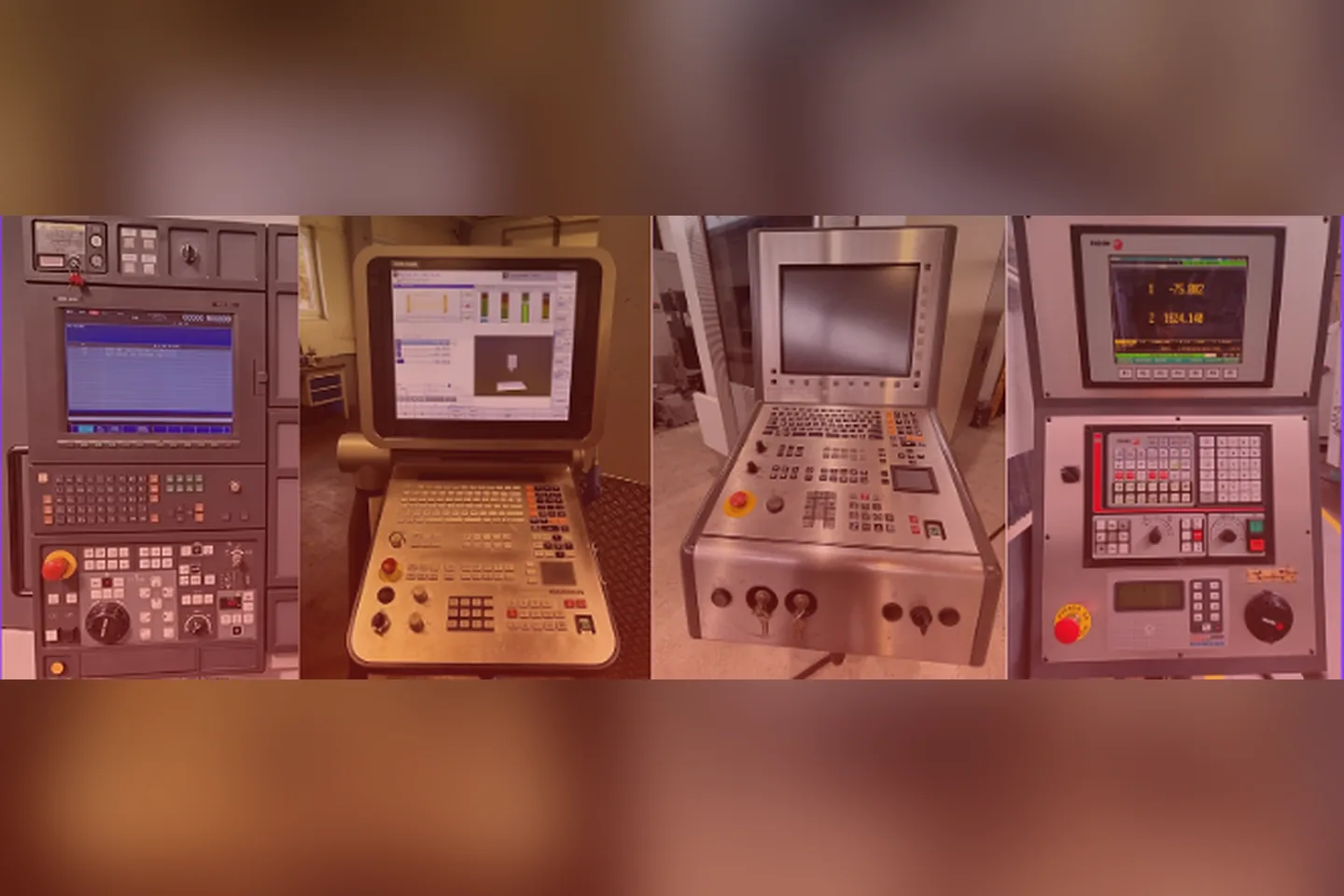
- Fanuc: the de facto industry standard: Fanuc is one of the world’s leading manufacturers of CNC controls. The Japanese company has extensive experience in automation, and its systems are used in numerous types of machine tools. Its controls are particularly renowned for their reliability, precision, and ability to adapt to different machining processes—features that have helped make Fanuc one of the most widely recognized names in the CNC market.
- Siemens: Siemens is one of the most recognized manufacturers in the field of numerical control and industrial automation. Its range of CNC controls, known as SINUMERIK, is found in various types of machine tools and enables precise management of movements and machining processes. Its extensive presence in the sector and its expertise in automation make Siemens one of the leading brands to consider when evaluating the purchase of a CNC machine.
- Heidenhain TNC 530, TNC 640, and TNC 7: this is another leading manufacturer of numerical control systems, with a particularly strong presence in milling machines and machining centers. Among its best-known controls is the iTNC 530, widely used in industrial machinery, along with later generations such as the TNC 640, developed for more advanced milling and machining applications. The latest generation is represented by the TNC7, which introduces a new approach to CNC control aimed at simplifying the programming and operation of increasingly complex machining processes.
- Fagor Automation, the Spanish CNC control: it represents the Spanish alternative among the leading CNC control manufacturers. Its systems are designed to precisely manage different machining processes and are used across various types of machine tools. The company offers solutions for both turning and milling applications, combining process control, automation and ease of use to meet the requirements of different production environments.
- In addition to the major CNC control manufacturers, some machine tool brands develop their own proprietary control systems. Mazak uses Mazatrol, designed to simplify the programming and operation of its machines, while Okuma integrates its OSP platform. DMG MORI offers CELOS as an interface for managing and optimising different production operations, while Haas equips its machines with its own CNC control system, featuring an interface designed to simplify the operator’s work.
What to Check in the CNC Control When Buying a Used Machine
When buying a used CNC machine, checking the condition of the control system is just as important as inspecting the mechanical components. Beyond verifying that it operates correctly, several factors can affect the machine’s usability, maintenance requirements and potential future costs.
Software Version and Licensed Options
It is advisable to identify the installed software version and check which functions and options are actually enabled on the control. Some features may require specific licences, meaning that two machines equipped with similar CNC controls may not necessarily offer the same capabilities. Understanding the exact configuration before purchasing helps determine whether the control meets the requirements of the intended machining processes.
Condition of the Screen, Keyboard, Battery and Memory System
The physical components of the control should also be carefully inspected. The screen should display correctly, while the keyboard and other controls should respond without any issues. It is also important to check the condition of the battery responsible for retaining certain CNC data and to identify the system used to store or transfer programs, particularly when dealing with older-generation controls.
Backup of Parameters, PLC and Programs
Before purchasing a used machine, it is highly recommended to confirm that a backup of the information required for its operation is available. Having a backup of the control parameters, PLC and programs makes it easier to restore the machine in the event of data loss, component replacement or certain maintenance operations. Having this documentation available can help prevent future problems and reduce machine downtime.
Remaining Manufacturer Support
The age of the control can also affect the availability of technical support, updates and replacement components. It is therefore advisable to check whether the manufacturer still provides support for that particular model and whether spare parts remain readily available. An older CNC control may continue to operate reliably for many years, but the potential difficulty of sourcing certain components should be taken into account before purchasing the machine.
The CNC Control is a key factor when choosing a machine tool, especially when purchasing used machinery. Understanding the differences between manufacturers such as Fanuc, Siemens, Heidenhain and Fagor, as well as checking the condition, configuration and available support for the control, makes it easier to properly assess each machine before making a decision. Choosing the right machine depends not only on its mechanical capabilities, but also on having a CNC control that meets both current and future production requirements.